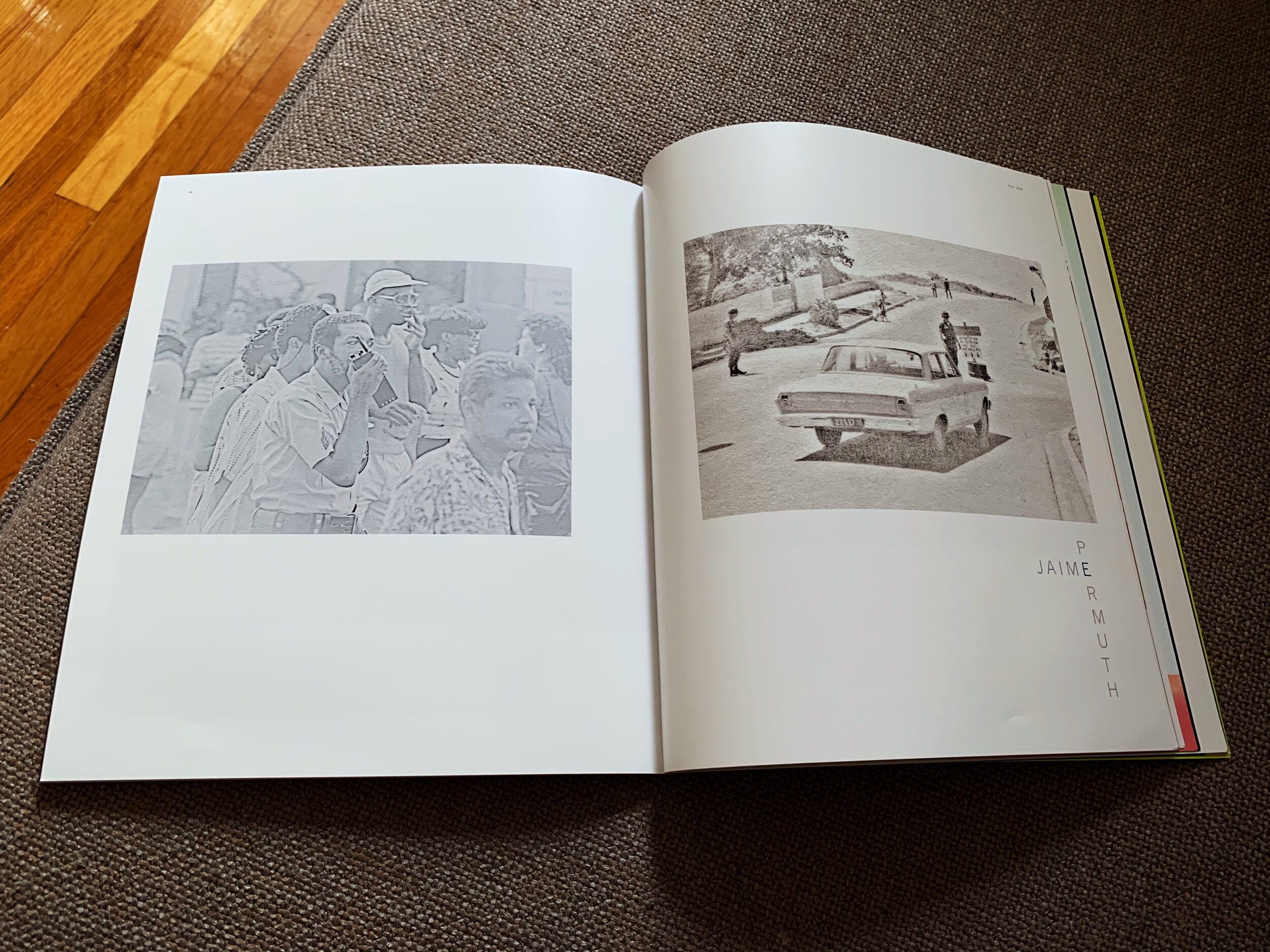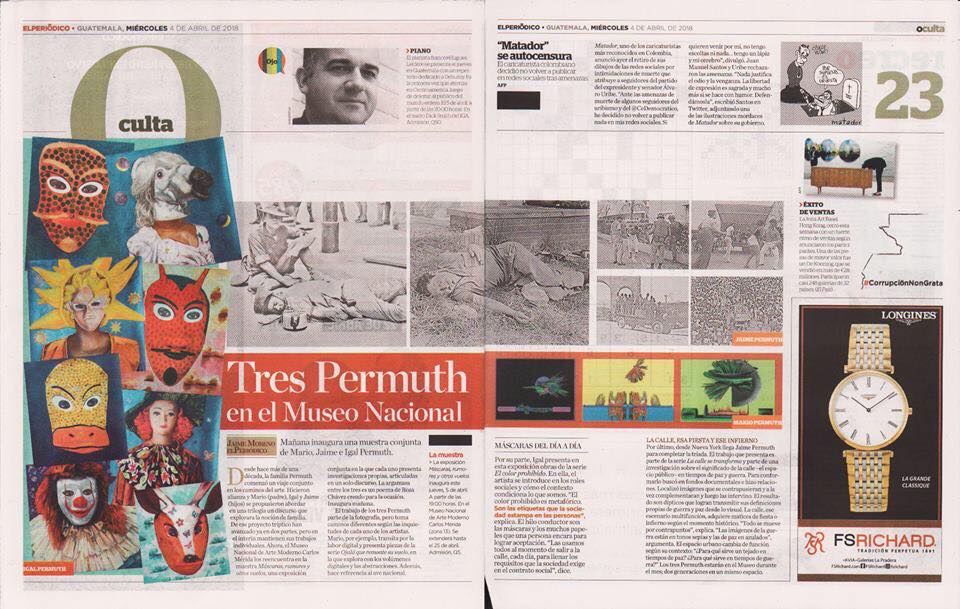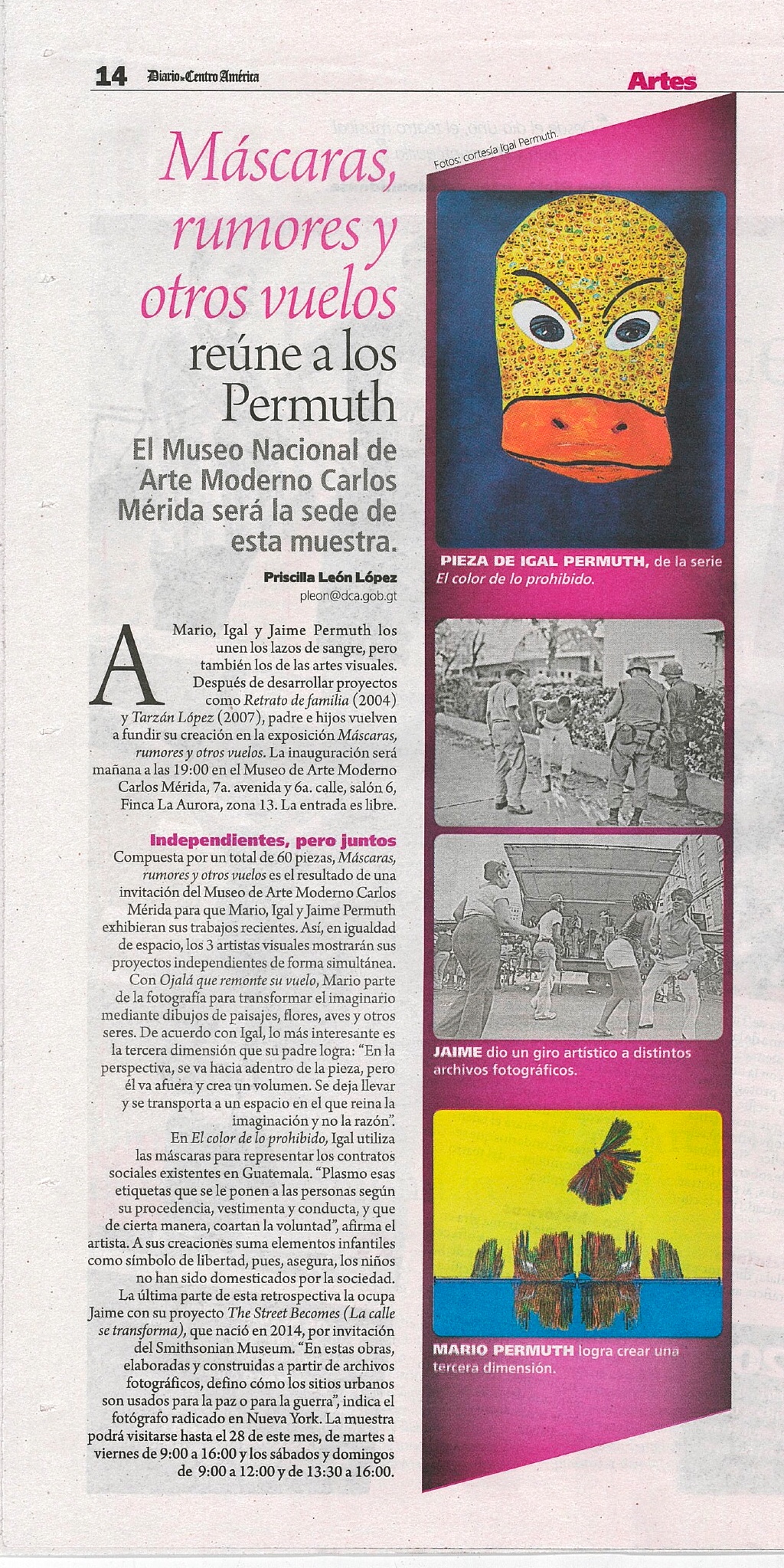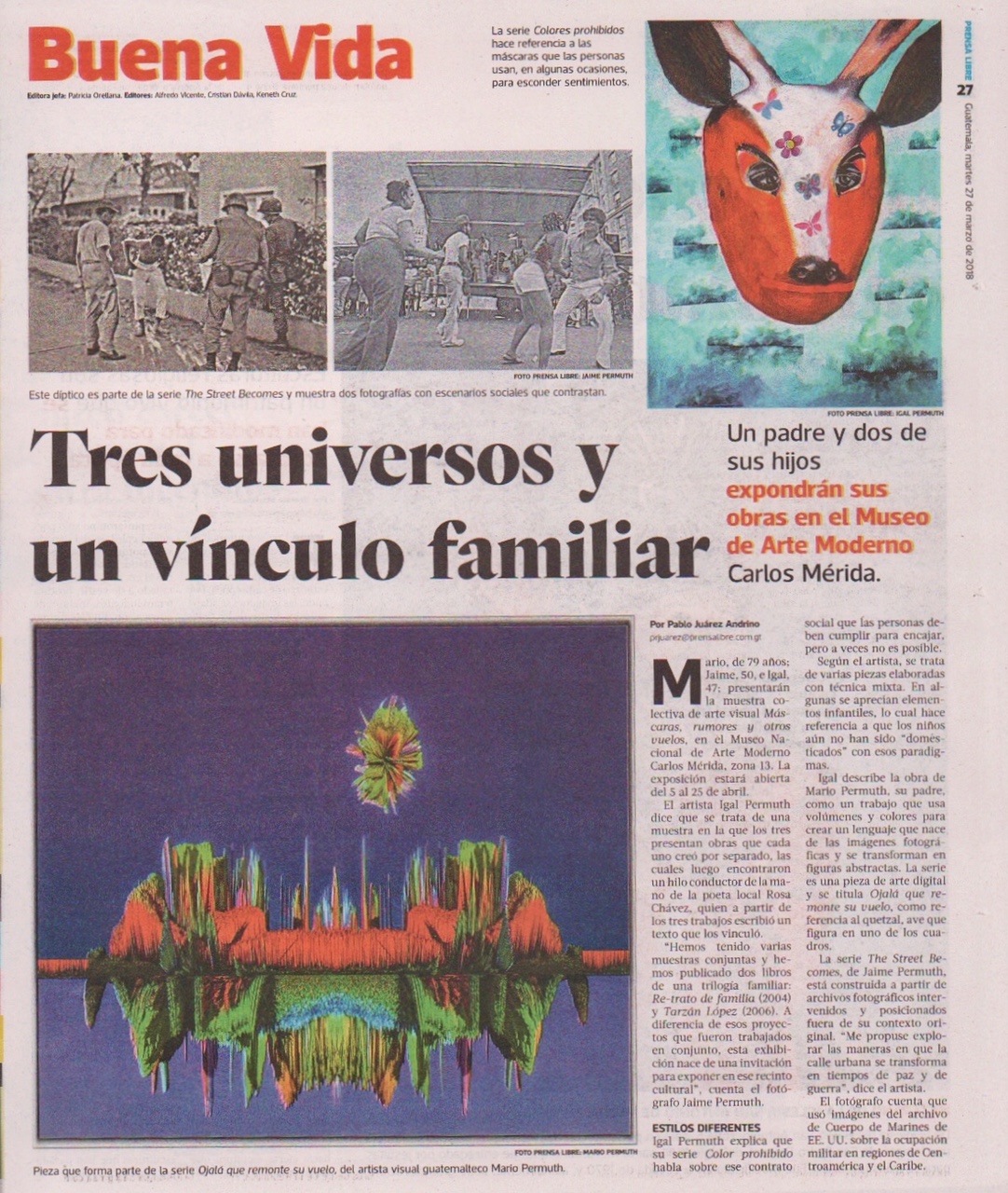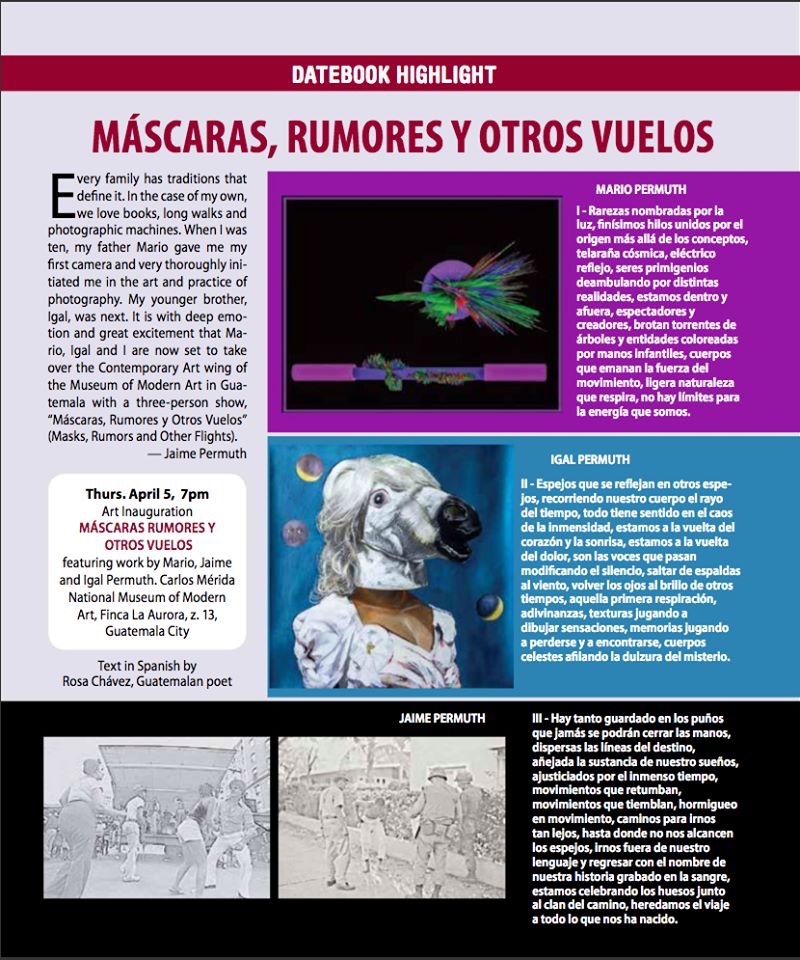
I could not ask for a more thoughtful introduction to myself and my series BLINDNESS, than the one written by Sujong Song, Senior Curator at the National Museum of Modern and Contemporary Art, in today’s edition of JoongAng Sunday.
https://www.joongang.co.kr/article/25386105
“Blind City”
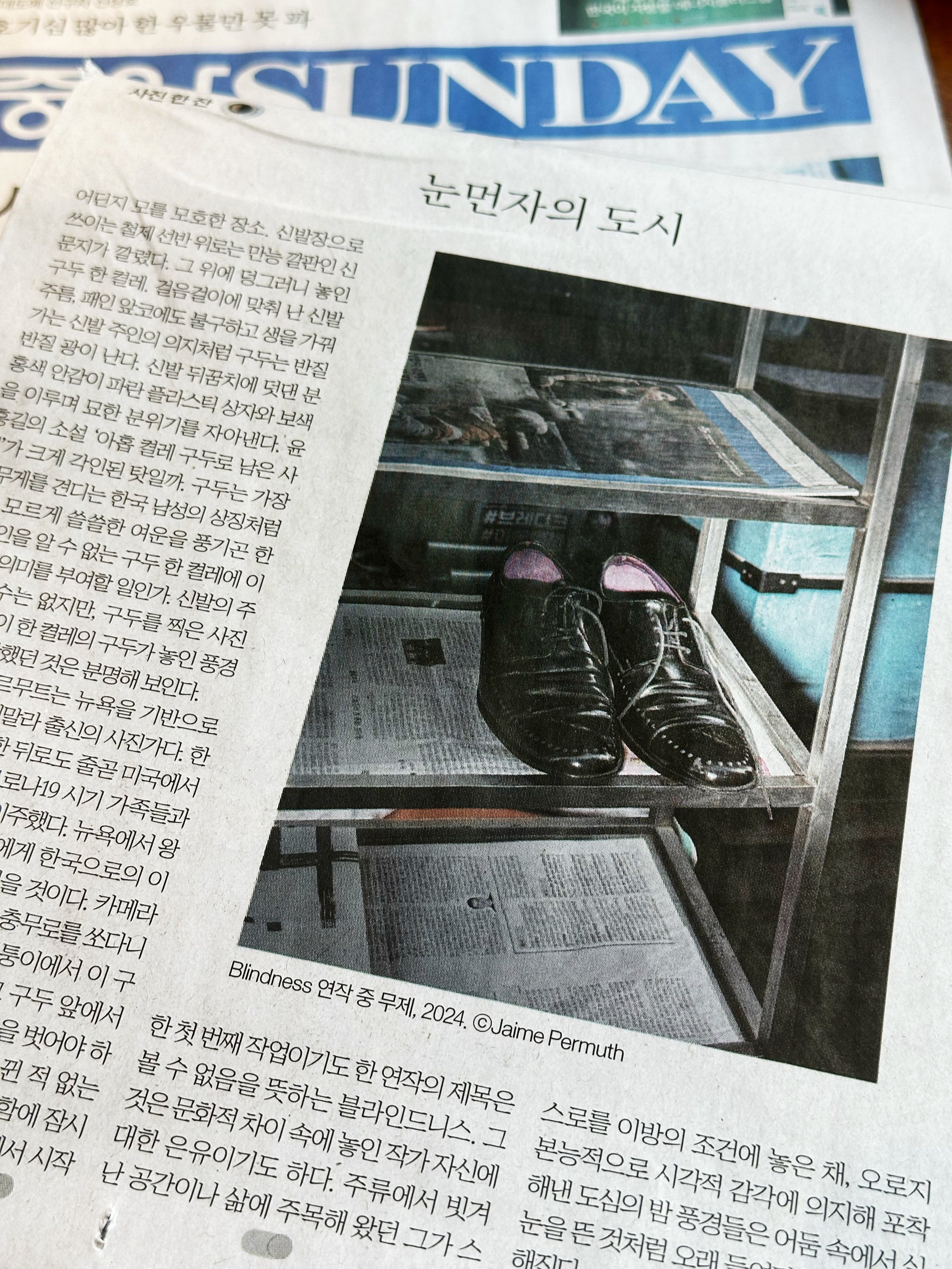
A vaguely defined place whose location is unclear. On top of a metal shelf used as a shoe rack, sheets of newspaper—the universal protective lining—have been spread out. Resting there, all alone, is a pair of dress shoes. Despite the creases formed by the wearer’s gait and the scuffed toes, the shoes shine, polished to a gloss like the determination of their owner, who continues to tend to his life. The pink lining attached to the heels forms a complementary contrast with a blue plastic box, creating a subtle, peculiar atmosphere. Perhaps it’s because of the strong impression left by Yun Heunggil’s novel The Man Who Was Left as Nine Pairs of Shoes. Somehow, dress shoes often carry a faint air of melancholy, like a symbol of Korean men enduring the weight of supporting a family. Is it right to ascribe so much meaning to a single pair of shoes whose owner we cannot even identify? We may not know the owner, but it seems clear that the scene in which the photographer encountered this lone pair of shoes held significance for him.
Jaime Permuth is a Guatemalan-born photographer based in New York. Even after marrying a Korean artist, he continued to live primarily in the United States. During the COVID-19 pandemic, however, he and his family relocated to the outskirts of Seoul. For someone who had been highly active in New York, the move to Korea must have been a new challenge. One night, while wandering with his camera through Jongno, Euljiro, and Chungmuro, he came upon this pair of shoes at the corner of a building along the street. Standing before them, he may have been momentarily captivated by the sense of transience evoked by the cultural practice of removing one’s shoes indoors and the stale newspapers that hadn’t been replaced for a long time. The title of the series—his first body of work begun in Korea— is Blindness, signifying the inability to see. It is also a metaphor for the artist himself, positioned amid cultural differences. Having long focused on spaces and lives that exist outside the mainstream, Permuth placed himself in the condition of a foreigner and relied solely on instinctive visual perception to capture the nighttime urban landscapes. Like opening one’s eyes slowly in the dark, the longer you look, the sharper these scenes become.
— Song Sujong, Senior Curator, National Museum of Modern and Contemporary Art